
From Crown Preps to Full Mouth Rehabilitation: How Restorative Skills Build on Each Other
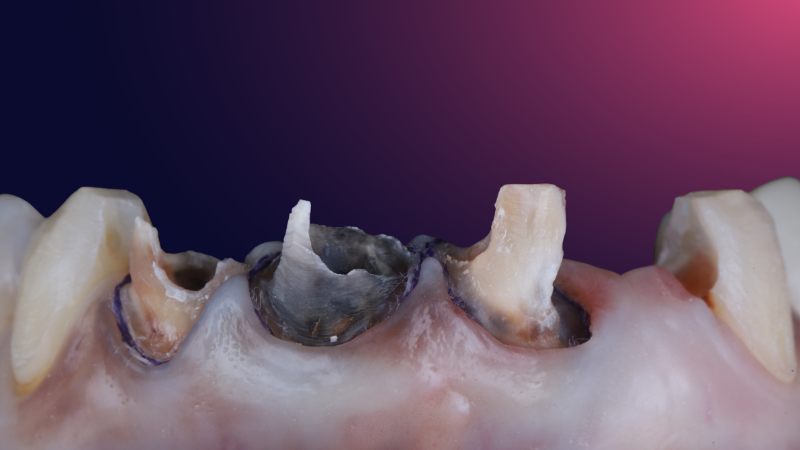
Restorative dentistry rarely develops as a collection of isolated skills.
The techniques used in a crown preparation appointment influence how confidently a dentist approaches indirect restorations. The principles used to create stable contacts and contours in direct dentistry carry into more advanced restorative work. Provisionalization becomes increasingly important as cases become larger. Treatment planning becomes more complex as the number of teeth involved increases.
That is why advanced restorative dentistry is usually easier to approach when the foundational skills underneath it are already familiar.
For early-career dentists especially, it can be useful to think of restorative education as a progression. The goal is not to rush toward the most complex procedures as quickly as possible. It is to develop each layer of clinical skill so that the next one has something solid to build on.
Direct restorative skills create the foundation
Many dentists begin by developing confidence with direct composite restorations because they are such a large part of everyday clinical practice.
Although a posterior composite may seem very different from a full mouth rehabilitation, many of the underlying principles are surprisingly relevant later.
Direct restorative dentistry helps dentists develop greater control over:
- Isolation
- Matrix placement
- Proximal contacts
- Contour
- Occlusion
- Material handling
- Finishing and polishing
- Clinical sequencing
These skills become part of the dentist's everyday working habits.
For example, understanding how to create a stable proximal contact in a posterior composite case helps develop a broader appreciation for contact, contour, and cleansability. Managing moisture effectively during adhesive procedures also becomes increasingly important when dentists move into more advanced adhesive indirect dentistry.
The procedures may become more complex, but the fundamentals do not disappear.
Crown preparations introduce a broader restorative workflow
Crown preparation is often one of the first major steps into indirect restorative dentistry.
The preparation itself is only one part of the appointment. Dentists also need to think about margin placement, reduction, taper, occlusion, tissue management, scanning or impressions, provisionalization, and communication with the laboratory.
That makes crown preparation an important bridge between individual hand skills and a more complete restorative workflow.
RipeGlobal's Crown Preparations course focuses on this broader sequence, including preparation design, impression and scanning techniques, provisionals, occlusion, and quadrant preparation.
Developing consistency in this area matters because many more advanced restorative procedures depend on the same basic skills.
If a dentist struggles to control margins, evaluate reduction, capture a clear scan, or produce a stable provisional for a single crown, those problems can become much more difficult when several teeth are being treated at once.
Provisionals become more important as cases become larger
Provisionals are sometimes underestimated in simple restorative cases. As treatment becomes more complex, their role becomes much more obvious.
A well-designed provisional can help protect prepared teeth, maintain contacts, support soft tissues, preserve occlusion, and give both the dentist and patient an opportunity to evaluate the planned result before definitive restorations are completed.
In anterior dentistry, provisionals can also provide information about aesthetics, length, shape, phonetics, and patient expectations.
In larger rehabilitative cases, they become even more valuable because they allow the dentist to assess function and stability before committing to the final restorations.
This is why learning how to create predictable provisionals earlier in a restorative career can pay off later. It is not simply a temporary restoration skill. It becomes part of the treatment planning process.
Onlays and overlays expand restorative decision-making
Once dentists become comfortable with conventional crown preparations, the next stage of development may involve learning when a full-coverage crown is not necessary.
Modern onlays and overlays allow dentists to consider more conservative indirect restorative options in suitable cases. This requires a shift in thinking.
Instead of automatically asking how to prepare the tooth for a crown, the dentist begins asking:
- How much healthy tooth structure remains?
- Which cusps need protection?
- Can more tooth structure be preserved?
- What material is appropriate?
- Can isolation be achieved predictably?
- Is an adhesive indirect restoration suitable for this case?
RipeGlobal's Modern Onlays & Overlays course focuses on this type of decision-making as well as preparation design, adhesive workflows, and cementation.
This is an important step in restorative progression because the dentist is moving beyond simply performing a procedure and into choosing between different restorative approaches.
Anterior dentistry adds another layer of complexity
Anterior restorative dentistry introduces different priorities. Function remains important, but aesthetics becomes much more visible. Tooth shape, symmetry, surface texture, shade, translucency, smile design, and soft tissue relationships all have a greater influence on the final result.
Dentists also need to consider how the anterior teeth interact during function. Skills developed earlier still matter. Preparation control, provisionals, scanning, isolation, adhesive technique, and occlusion are all relevant. The difference is that the margin for visible error becomes smaller.
A technically acceptable posterior restoration may go largely unnoticed by a patient. A small discrepancy in the length, shape, or shade of an anterior restoration may be immediately obvious.
This is why anterior crowns, provisionals, composite veneers, and ceramic veneers usually make more sense once the dentist already has a reliable restorative foundation. The new skills are being added to an existing workflow rather than learned in isolation.
Treatment planning becomes more important as the number of teeth increases
The complexity of restorative dentistry changes significantly when a case moves from one tooth to several teeth.
With a single restoration, the clinical question may be relatively contained.
As the case grows, dentists need to think about the relationship between different teeth, the order of treatment, the patient's periodontal health, tooth prognosis, occlusion, missing teeth, aesthetics, and how one decision may affect another.
That is where treatment planning starts to become just as important as the technical procedures themselves.
A dentist may be capable of preparing individual crowns very well but still find a larger case difficult if there is no clear sequence.
RipeGlobal's Rapid Efficient Treatment Planning course focuses on helping dentists structure more comprehensive treatment plans, including how to organize the case and communicate the plan clearly with the patient.
As restorative skills develop, the ability to decide what should be treated, when it should be treated, and in what order becomes increasingly important.
Full mouth rehabilitation brings those skills together
Full mouth rehabilitation is not simply crown preparation performed on more teeth. It requires several restorative skills to work together at the same time.
A dentist may need to manage:
- Diagnosis and comprehensive treatment planning
- Occlusion
- Multiple preparations
- Stable reference points
- Provisional restorations
- Aesthetic changes
- Bite management
- Laboratory communication
- Sequencing across several appointments
- Definitive cementation and finishing
This is why full mouth rehabilitation generally sits later in a restorative learning pathway.
RipeGlobal's Full Mouth Rehabilitation course is designed for dentists who are already comfortable with single-unit and quadrant indirect dentistry, with prior competence in areas such as crown preparations and posterior indirect restorations. That progression is important.
If each individual procedure is still unfamiliar, managing several of them simultaneously can make the case unnecessarily difficult. When the underlying workflows are already familiar, the dentist can focus more attention on the higher-level decisions that make the case complex.
Restorative progression does not need to be rushed
Dentists do not all need to follow exactly the same educational path.
One clinician may spend more time developing direct restorative skills before moving into indirect dentistry. Another may become comfortable with crown preparations early but want more training in anterior aesthetics. Someone else may be clinically experienced but want to improve treatment planning before taking on larger cases. The useful principle is progression, not speed.
RipeGlobal's Restorative Master Series reflects this by separating restorative education into focused courses that allow dentists to develop individual skills and build toward more advanced treatment over time.
That approach can make restorative education feel more manageable because dentists can focus on the clinical area most relevant to them now, then add another layer when they are ready.
Advanced dentistry is built on familiar fundamentals
The jump from a single crown preparation to full mouth rehabilitation can look enormous. When the pathway is broken into smaller skills, it becomes easier to understand.
Direct restorative dentistry develops isolation, contour, contacts, and material handling. Crown preparations introduce indirect workflows. Provisionals teach control over temporary form and function. Onlays and overlays expand restorative decision-making. Anterior work adds aesthetic complexity. Treatment planning connects multiple procedures into one logical sequence.
Full mouth rehabilitation brings those skills together. The individual procedures may become more advanced, but the fundamentals remain underneath them. That is why building restorative skills progressively can be more useful than trying to skip directly to the most complex treatment.
Each skill gives the next one something to stand on.