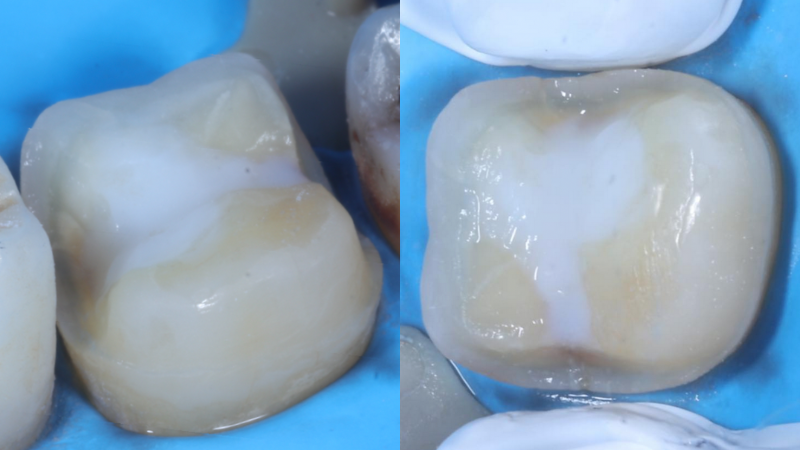
The patient books because one tooth has fractured. There is a large restoration, a missing cusp, or an old crown that has failed. The immediate problem seems clear, and the obvious next step is to repair or restore that tooth.
Sometimes, that is exactly the right approach. Not every fractured restoration signals a complex occlusal problem. Not every worn tooth requires full-mouth rehabilitation. Patients should not be pushed toward extensive treatment simply because several teeth are less than perfect.
But there are cases where the broken tooth is not the whole problem. It may be the latest sign of a pattern involving generalized tooth wear, erosion, parafunction, unstable contacts, repeated restorative failure, missing teeth, or a loss of restorative space.
In those cases, treating one tooth at a time can become a cycle. A restoration is replaced, another tooth fractures, the bite changes slightly, and the overall cause remains unaddressed. The challenge is knowing when to repair the tooth in front of you and when to step back and assess the entire dentition.
One broken tooth does not automatically mean full-mouth treatment
It is important to begin with restraint. A patient with a single fractured cusp may only need localized treatment. The tooth may have failed because of an isolated large restoration, caries, trauma, or a structural weakness that does not affect the rest of the mouth. The presence of tooth wear is not automatically an indication for restorative treatment either.
Tooth wear can be physiological, slowly progressing, and well tolerated. Consensus guidance recommends assessing its cause, severity, progression, functional effect, and impact on the patient before deciding whether treatment is needed. Restorative intervention is often best delayed when the condition is stable and manageable through prevention and monitoring.
The goal is not to turn every small problem into a comprehensive case. It is to recognize when several seemingly separate problems are connected.
Look for a pattern, not only the damaged tooth
The first clue is often repetition. One failed restoration may be unfortunate. Several fractured restorations across different parts of the mouth deserve a closer look.
Patterns that may justify a broader assessment include:
- Repeated fracture of teeth or restorations
- Generalized flattening of the occlusal surfaces
- Shortened anterior teeth
- Cupping or concavities in the tooth surfaces
- Multiple heavily restored teeth
- Chipping of ceramic restorations
- Loss of posterior support
- Increasing sensitivity
- Changes in speech or chewing
- A history of restorations that never seem to last
- Limited space for the restoration being planned
- A bite that is difficult to reproduce
- Significant differences between the appearance of individual teeth and the overall dentition
The pattern matters because tooth wear is usually multifactorial. Mechanical wear, chemical erosion, parafunctional activity, diet, gastric acid exposure, missing teeth, and existing restorative materials may all contribute. A worn dentition should therefore be assessed at both the individual tooth level and the whole-mouth level. The visible fracture may be where the system finally gave way. It does not necessarily tell you why.
Ask why the restoration failed
When replacing a failed restoration, it is easy to focus immediately on the new material or preparation design. Would ceramic be stronger? Should the cusp be covered? Would a crown prevent the same fracture? Those may be valid questions, but they should come after another one: Why did the previous restoration fail?
Possible contributors include:
- Recurrent caries
- Inadequate remaining tooth structure
- Poor material thickness
- Bonding or cementation failure
- An unsupported cusp
- Heavy occlusal contact
- Parafunction
- An unfavorable restoration design
- Poor case selection
- A change in the surrounding dentition
- An underlying pattern of erosion or wear
The answer may be entirely local. If it is, localized treatment makes sense. If the same type of failure appears across several teeth, simply choosing a stronger material may not solve it. The new restoration will still function within the same oral environment.
That does not mean every failure is “caused by the bite.” Occlusion is often blamed too casually in dentistry. Restorative failure is usually influenced by multiple biological, structural, material, and behavioral factors. The wider assessment is about identifying those factors, not forcing every patient into one explanation.
Generalized tooth wear deserves a diagnosis before restoration
Tooth wear describes the loss of dental hard tissue through processes other than caries. It may involve erosion, attrition, abrasion, or a combination of mechanisms. In practice, these processes often overlap.
A useful assessment should consider:
- Where the wear is located
- Which surfaces are affected
- Whether enamel, dentin, or both are involved
- The likely cause or causes
- Whether the wear is active
- How quickly it is progressing
- Whether the patient has symptoms
- Whether function or appearance is affected
- Whether there is enough space to restore the teeth
- The condition of existing restorations
Erosive tooth wear, for example, is a chemical-mechanical process involving cumulative loss of tooth structure that is not caused by bacteria. Relevant factors may include acidic foods and drinks, reflux, vomiting, medications, occupational exposure, and individual susceptibility. Restorative treatment should be paired with preventive management rather than carried out without addressing the cause.
This is why the treatment plan should not begin with, “How many teeth need crowns?” It should begin with, “What is happening, why is it happening, and is it still happening?”
The location of the wear can provide clues
The distribution of tooth wear may help guide further investigation.
For example:
- Palatal wear of the upper anterior teeth may suggest intrinsic or extrinsic acid exposure.
- Cupping of the occlusal surfaces may be associated with erosive wear combined with mechanical forces.
- Flattened opposing surfaces may suggest tooth-to-tooth contact.
- Wear concentrated around certain restorations may reflect differences in material behavior or contact.
- Localized anterior wear may raise different treatment questions from generalized wear across both arches.
These patterns are not diagnostic on their own. A patient may have more than one contributing factor, and the appearance of the wear should be considered alongside their medical history, diet, habits, symptoms, saliva, existing restorations, and clinical examination. The goal is to build a plausible diagnosis rather than label the condition from one visual clue.
Do not assume worn teeth mean the vertical dimension has been lost
One of the biggest treatment-planning traps is assuming that significant tooth wear automatically means the patient has lost occlusal vertical dimension.
The dentition can adapt as wear progresses. Teeth may erupt, alveolar structures may compensate, and the face may not show a simple reduction that matches the amount of tooth structure lost. This means vertical dimension should be assessed rather than guessed.
Relevant considerations may include:
- Available restorative space
- Facial appearance
- Incisal display
- Speech
- Existing occlusal relationships
- Tooth proportions
- The amount and location of wear
- Interarch space
- Patient comfort
- Whether the planned position can be tested predictably
Increasing the occlusal vertical dimension can create restorative space in selected cases, but it is a treatment decision rather than a default response to wear.
A recent multidisciplinary consensus statement found that direct and indirect minimally invasive approaches can both be viable for worn dentitions. The choice should depend on the extent of tooth loss and the treatment goals. It also emphasized individualized planning, adequate diagnosis, and preservation of tooth structure. The amount of change should come from the needs of the case, not a standard number applied to every patient.
A full-mouth assessment does not always lead to full-mouth rehabilitation
This distinction is important. Looking at the whole mouth means diagnosing and planning comprehensively. It does not automatically mean restoring every tooth.
After a broader assessment, the appropriate plan might involve:
- Monitoring the wear
- Dietary counseling
- Medical referral for suspected reflux or another underlying condition
- Managing sensitivity
- Improving plaque control
- Using preventive products
- Providing a protective appliance where appropriate
- Replacing only the restoration that has failed
- Restoring a limited group of teeth
- Using an additive direct composite approach
- Staging treatment over time
- Combining restorative and orthodontic treatment
- Referring for specialist or interdisciplinary care
- Undertaking comprehensive rehabilitation
Consensus guidance generally supports conservative and minimally invasive treatment where intervention is needed. The value of the full-mouth assessment is that it helps the clinician choose the smallest appropriate intervention with a clearer understanding of the risks.
Missing teeth can change the treatment question
A fractured tooth does not function in isolation. If posterior teeth are missing, heavily restored, or no longer providing stable support, the tooth being treated may be carrying a different load than it did previously.
Likewise, drifting, overeruption, and changes in the occlusal plane can affect the space and position available for the new restoration.
Before restoring the individual tooth, consider:
- Is the opposing tooth present and stable?
- Are the adjacent contacts reliable?
- Is there adequate restorative space?
- Has the tooth moved?
- Are missing teeth affecting the overall plan?
- Is the patient functioning mainly on one side?
- Will replacing the single tooth make future treatment harder?
- Does the patient intend to replace other missing teeth?
The answer may still be a single restoration. The difference is that it has been planned in the context of what surrounds it.
Bruxism and parafunction are risk factors, not complete diagnoses
Patients with repeated fractures often describe themselves as grinders, or they may have been told that bruxism explains every dental problem they have. Parafunction can increase mechanical risk, but it should not become a shortcut that ends the assessment.
The clinician still needs to consider:
- The remaining tooth structure
- Restorative material and design
- Occlusal contacts
- Existing wear patterns
- The presence of erosion
- The patient’s history of fractures
- Sleep or awake behaviors
- Muscle or joint symptoms
- Missing teeth
- The condition of previous restorations
A protective appliance may be appropriate for some patients, but it does not correct active erosion, replace missing tooth structure, or guarantee that restorations will not fail. The risk factors need to be discussed honestly, particularly when a patient is considering extensive treatment.
Records make the pattern easier to see
A full-mouth assessment does not need to begin with an elaborate treatment plan. It begins with good records.
Depending on the case, these may include:
- Medical and dental history
- History of the current complaint
- Dietary and reflux screening
- Parafunction history
- Periodontal assessment
- Full-mouth clinical examination
- Photographs
- Intraoral scans or study models
- Appropriate radiographs
- Occlusal assessment
- Tooth wear charting
- Pulpal and periapical tests where indicated
- Existing restoration assessment
- Patient-reported symptoms and concerns
Photographs and scans can be especially useful for monitoring. When the clinical team relies only on memory, it can be difficult to know whether wear is progressing. Comparing consistent records over time can help determine whether the condition is stable or active.
Records also make it easier to show the patient that the concern extends beyond one damaged tooth without using fear-based language.
Separate the urgent problem from the complete diagnosis
Some patients arrive in pain or with a tooth that needs immediate protection. A comprehensive assessment should not delay necessary urgent care.
The tooth may need stabilization, a provisional restoration, endodontic assessment, caries management, or another immediate intervention before the wider plan is complete. It can help to separate treatment into phases:
Phase 1: Manage the immediate problem
Relieve pain, protect vulnerable tooth structure, control disease, or stabilize the failed restoration.
Phase 2: Investigate the pattern
Collect records, assess the wear, review previous failures, evaluate risk factors, and clarify the patient’s priorities.
Phase 3: Control active causes where possible
Address preventable contributors such as diet, reflux, oral hygiene, or ongoing disease. Coordinate with other health professionals where appropriate.
Phase 4: Test the proposed changes
Use a mock-up, provisional phase, direct trial restoration, appliance, or other appropriate evaluation method when changes to appearance, function, or vertical dimension need to be assessed.
Phase 5: Deliver treatment in a planned sequence
This may be localized, staged, additive, indirect, interdisciplinary, or comprehensive depending on the diagnosis.
A staged approach can give the clinician and patient an opportunity to assess comfort, esthetics, and function before definitive treatment is completed. It also reduces the pressure to solve the entire case in one appointment.
Patient priorities still guide the plan
The full-mouth assessment may reveal many clinical findings. That does not mean the patient wants, needs, or can proceed with every possible treatment. Some patients are mainly concerned about sensitivity. Others want to improve appearance, prevent further fractures, chew more comfortably, or understand whether the situation is getting worse.
The dentist should explain:
- What has been identified
- Which findings are active or stable
- The likely contributing factors
- What may happen without treatment
- Which issues need urgent attention
- Which options are preventive
- Which treatments are restorative
- The limitations and risks of each approach
- Whether treatment can be staged
- The likely maintenance involved
A comprehensive diagnosis can still lead to a conservative plan. In fact, that is often the point. The clinician understands the whole problem well enough not to overtreat it.
When referral or interdisciplinary input may help
Some worn dentitions can be managed confidently in general practice. Others may benefit from input from a prosthodontist, periodontist, orthodontist, endodontist, oral surgeon, physician, dietitian, or another appropriately qualified professional.
Referral or collaboration may be useful when there is:
- Severe generalized tooth wear
- Significant loss of tooth structure
- Uncertainty about the diagnosis
- Active periodontal disease
- Complex endodontic involvement
- Major changes to vertical dimension
- An unstable or difficult-to-reproduce bite
- Significant esthetic changes
- A need for crown lengthening
- Complex orthodontic movement
- Multiple missing teeth
- Suspected reflux, eating disorder, or another medical contributor
- A treatment plan beyond the dentist’s current experience
Recognizing the need for another perspective is part of good treatment planning. The full-mouth view is not about one clinician doing everything. It is about ensuring each part of the treatment makes sense within the complete case.
What should happen before extensive restorative treatment?
Before moving into a larger rehabilitation, the clinician should be able to explain:
- The diagnosis and likely causes
- Whether the condition appears active
- The patient’s main concerns and goals
- The biological and mechanical risks
- Which teeth require treatment and why
- Whether the plan can remain additive or minimally invasive
- Whether vertical dimension needs to change
- How the proposed changes will be tested
- The planned treatment sequence
- What maintenance and future repair may involve
There may not be one perfect restorative material or occlusal philosophy for every case. Systematic reviews have found limited high-level evidence supporting one universal full-mouth rehabilitation approach. Treatment needs to be individualized, based on the condition of the dentition and the goals of the patient.
That uncertainty is not a reason to plan casually. It is a reason to diagnose carefully, preserve tooth structure where possible, and make each decision explicit.
Know when the tooth is asking a bigger question
A fractured tooth may only need a restoration. But repeated fractures, generalized wear, limited restorative space, unstable contacts, and a history of ongoing failure should prompt a wider assessment before another isolated solution is placed.
The question is not, “Does this patient need full-mouth rehabilitation?”
The first question is: “Is this genuinely a single-tooth problem?”
RipeGlobal’s restorative education includes training in individual procedures as well as the broader planning needed to understand how those procedures fit together. The Restorative Master Series provides focused short courses in restorative skills, while the Fellowship in Restorative Dentistry covers comprehensive diagnosis, treatment planning, occlusion, and rehabilitation through a longer structured program.
Because treating the tooth in front of you matters. Knowing when to look beyond it matters just as much.