AI in Dentistry Is Not the Skill Dentists Should Be Prioritising in 2026
Artificial intelligence is everywhere in dentistry right now.
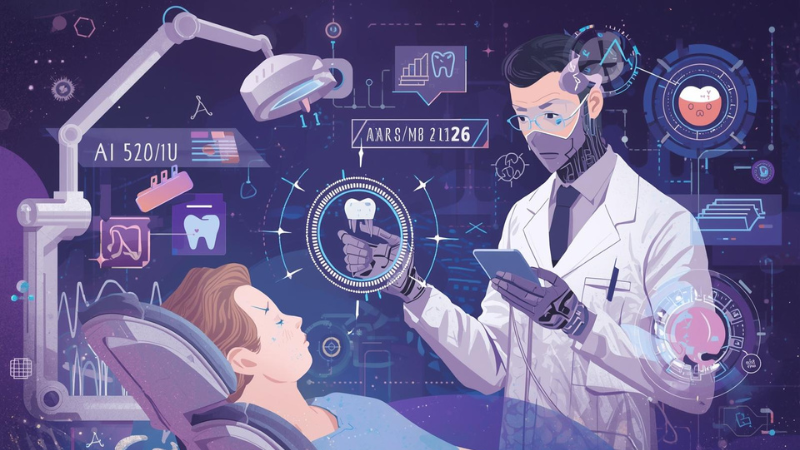
AI diagnostics. AI radiograph analysis. AI treatment simulations. AI-generated notes, reports, and workflows.
If you scroll LinkedIn or attend dental conferences, it can feel like learning AI is the new benchmark for staying relevant. As if dentists who don’t “get on board” are about to be left behind.
But here is the uncomfortable truth. AI in dentistry is not the skill dentists should be prioritising in 2026.
Not because AI does not matter. But because it is not where most dentists are actually stuck.
The Real Bottleneck in Modern Dentistry
Dentists are not struggling because they lack technology.
They are struggling because they are overloaded with decisions.
Every day involves constant judgement calls. Case selection. Sequencing. Communication. Risk assessment. Managing patient expectations. Managing time. Managing pressure.
AI promises efficiency, but efficiency only helps when the underlying thinking is already clear.
If treatment planning is disorganised, AI accelerates confusion.
If communication is weak, AI-generated visuals do not create trust.
If clinical judgement lacks structure, AI simply makes bad decisions faster.
Technology does not fix unclear thinking. It magnifies it.
Why AI Feels So Appealing Right Now
There is a reason AI feels attractive to dentists in 2026.
Dentistry is demanding more than ever. Patients are more informed and more hesitant. Clinical expectations are higher. Burnout is rising globally.
AI feels like relief.
A shortcut.
A way to reduce mental load.
A way to keep up without slowing down.
But relying on AI before mastering the fundamentals is like installing advanced navigation software without knowing how to read the road. The issue is not AI itself. The issue is timing.
Skills That Matter More Than AI in 2026
Before dentists prioritise learning AI tools, there are three skills that matter far more for long-term confidence, outcomes, and career sustainability.
1. Structured Clinical Thinking
The most valuable dentists in 2026 are not the ones using the most tools. They are the ones who can think clearly under pressure.
That means having structured frameworks for:
-
Case assessment
-
Treatment sequencing
-
Risk management
-
Decision making when options are not obvious
Without structure, every case feels heavy. Every decision feels personal. Every complication feels like a failure. AI can assist with suggestions, but it cannot replace judgement. And judgement improves through structure, not software.
2. Patient Communication That Builds Trust
AI can generate simulations and visuals, but it cannot read the room. Patients do not say yes because a plan looks impressive. They say yes because they feel understood.
Dentists who struggle with case acceptance are rarely struggling with dentistry. They are struggling with how they explain value, manage uncertainty, and guide conversations without overwhelming patients.
In 2026, communication is not a soft skill. It is a clinical skill. And it remains one of the biggest differentiators between stressed dentists and confident ones.
3. Decision Efficiency, Not Speed
Dentistry rewards good decisions, not fast ones.
Many dentists feel rushed, not because they lack time, but because they lack clarity. They second-guess plans. Revisit decisions. Carry cases mentally long after the day ends.
AI can produce options quickly, but it cannot tell you which decision aligns best with the patient, your skill set, and long-term outcomes. Dentists who thrive are not the fastest. They are the most decisive, because their thinking is organised.
Where AI Actually Fits in Dentistry
AI absolutely has a place in dentistry.
It can:
-
Support diagnostics
-
Improve documentation efficiency
-
Assist with visual communication
-
Reduce repetitive administrative load
But AI works best as an assistant, not a leader. It supports dentists who already have clarity. It struggles to help dentists who are still building it. The risk in 2026 is not being replaced by AI. The risk is outsourcing thinking too early.
Why This Matters for Burnout and Longevity
Burnout in dentistry rarely comes from physical workload alone.
It comes from constant mental strain. From carrying uncertainty case after case. From feeling like decisions are always heavy and high-stakes. AI does not remove that burden unless the dentist already feels in control.
True confidence comes from knowing how to think through complexity calmly, communicate clearly, and make decisions you trust. Those are human skills. They cannot be automated.
What Dentists Should Focus on First in 2026
If you are deciding where to invest your energy this year, consider this order:
-
Strengthen patient communication and consultation structure
-
Improve decision efficiency and clarity
-
Then layer AI tools on top to support those skills
When fundamentals are strong, AI becomes powerful. When fundamentals are weak, AI becomes noise.
The Dentists Who Will Lead the Next Decade
The dentists who will stand out over the next ten years will not be defined by their software stack.
They will be defined by how they think. Clear thinkers. Calm decision makers. Strong communicators. Clinicians who rely on structure, not stress.
AI will evolve quickly. Clinical fundamentals will always matter.
In 2026, the smartest move is not chasing the newest tool. It is mastering the skills that make every tool work better.