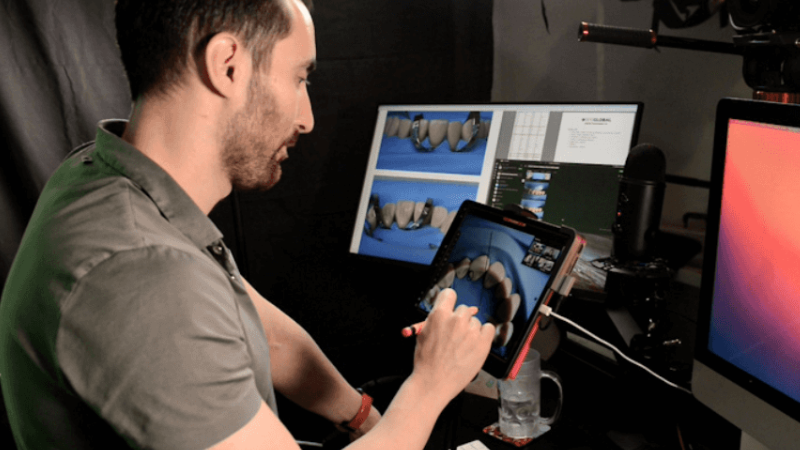

There is no shortage of online dental education.
A quick search can lead you to thousands of lectures, webinars, subscriptions, clinical videos, short courses, and full training programs. Some are free. Some cost a few hundred dollars. Others require a much larger investment. The difficult part is not finding content. It is working out which platform will actually help you become a better clinician.
A large video library can look impressive, but it does not necessarily mean the education is relevant, current, or easy to use. A well-known educator may attract attention, but their teaching style may not suit the way you learn. A course may offer continuing education credits while doing very little to change how you work in the clinic.
Choosing a platform should therefore involve more than comparing prices or counting the number of videos included. The best option is the one that matches your clinical goals, gives you a clear way to learn, and helps you move from knowing more to working more predictably.
Start with the clinical problem you want to solve
Before looking at platforms, get clear on what you actually need. “Improving my dentistry” is a reasonable goal, but it is too broad to guide a useful decision. Try to identify the clinical situation that keeps creating friction.
It might be:
- Crown preparations that feel inconsistent
- Composite contacts that remain unpredictable
- Difficulty selecting cases
- Uncertainty around treatment planning
- Limited confidence presenting larger treatment plans
- A desire to begin placing implants
- A need to improve aligner diagnosis
- Gaps in occlusion knowledge
- A lack of structured CE or CPD
This matters because different learning needs require different types of education.
A broad subscription may be useful when you want regular access to multiple topics. A focused short course may be better when one particular skill is causing frustration. A longer structured program may be more suitable when you are building capability in a new clinical discipline.
Without a clear goal, it is easy to choose a platform with an impressive library and still feel unsure about what to watch first.
Look beyond the number of hours
Online education platforms often promote the size of their content library. Hundreds of hours can represent excellent value, but only when the content is useful and organized well enough to find.
A dentist is unlikely to complete every lecture on a large platform, and that should not be the goal. The more important questions are:
- Does the library cover subjects relevant to my clinical work?
- Can I find the right content quickly?
- Are there clear categories or learning pathways?
- Does the platform recommend what to study next?
- Are the lectures connected, or are they isolated presentations?
- Is new education added regularly?
- Is older content reviewed or updated?
The American Dental Association itself offers subscription access to hundreds of online CE courses, with new on-demand content added regularly and completed credits recorded in an online transcript. This reflects the wider shift toward organized, ongoing access rather than purchasing every course individually. The quantity may catch your attention, but structure is what makes that quantity usable.
Check who is teaching and why they are qualified
An education platform should make it easy to see who created the content.
Look for information about:
- The educator’s clinical background
- The area in which they practice and teach
- Their experience with the procedure or subject
- Whether they continue to treat patients
- Any relevant academic or specialist qualifications
- Potential commercial relationships
- Whether claims are supported by evidence
A large social media following does not automatically make someone a strong educator. Clinical expertise matters, but the ability to teach matters too. The educator should be able to explain why a decision is made, what could go wrong, and how the approach changes when the case is less than ideal. Be cautious when the teaching only shows beautiful final results.
Real clinical education should also discuss:
- Case selection
- Limitations
- Complications
- Failed approaches
- Alternative options
- When referral may be more appropriate
- The difference between evidence and personal preference
The most useful educators do not simply tell you which product or technique they use. They help you understand the reasoning behind it.
Make sure the content is clinically relevant
Some education is interesting without being particularly useful on Monday morning. That does not make it worthless. Dentistry needs research, theory, and broader professional discussion. However, when your goal is practical clinical development, the platform should regularly connect information to real decisions.
Useful clinical education may answer questions such as:
- What should I assess before treating this case?
- How do I know whether this option is appropriate?
- What are the common signs that something is going wrong?
- Which steps have the greatest influence on the result?
- How should I modify the workflow for a more difficult case?
- What would make an experienced clinician stop and reconsider?
- What information should be documented or communicated?
The ADA defines continuing dental education as activity that maintains, develops, or increases the knowledge, skills, professional performance, and relationships dentists use to serve patients and the profession. A platform should therefore offer more than content that is entertaining to watch. It should support clearer thinking, better judgment, or stronger performance.
Understand whether you are buying theory or practical training
This is one of the most important distinctions. A course can be described as practical because it includes clinical demonstrations and useful tips. That may make the content highly relevant, but it does not necessarily mean the learner will practice the skill. Before enrolling, establish exactly what the course includes.
Theory-based online education may include:
- Recorded lectures
- Clinical demonstrations
- Literature reviews
- Treatment discussions
- Technique explanations
- Quizzes or assessments
Practical online education may additionally include:
- A simulation kit or typodont
- Exercises completed during the course
- Live instruction
- Educator review
- Photograph, video, or scan submissions
- Structured checkpoints
- Feedback and correction
- Opportunities to repeat the exercise
Neither format is automatically better. They serve different purposes. Theory may be enough when you want to refresh knowledge, understand a new material, or review a clinical concept. If you want to develop a manual skill, you should look for actual practice and feedback.
RipeGlobal’s Restorative Master Series, for example, separates the on-demand clinical theory from the live online simulation session. Participants complete the theory first, then attend live training focused on performing the relevant restorative exercises with educator guidance. The important thing is knowing which experience you are signing up for.
Check whether feedback is included
Feedback is one of the main differences between content consumption and guided learning. Watching an expert can help you understand what a good result looks like. It may not help you recognize why your own result is different.
Useful feedback might include:
- Questions answered during a live session
- Individual comments on submitted work
- Group review of common mistakes
- Case guidance
- Educator mentoring
- Digital scan review
- Structured self-assessment tools
- Discussion with peers
Ask how the feedback works.
Is it live or delayed? Is it individualized or provided to the entire group? Is there a limit to how many cases or exercises you can submit? Does support continue after the course?
A platform may use words such as “mentorship,” “support,” or “community” without explaining what those terms mean in practice. The more specific the provider is, the easier it is to judge the value.
Confirm the CE/CPD details
Do not assume that every online dental course will count toward your professional requirements.
Check:
- Who provides or recognizes the credits
- How many credits are available
- Whether the course is classified as live or self-study
- Whether an assessment is required
- Whether every part of the course must be completed
- How certificates are issued
- Whether credits are accepted by your licensing body
- Whether there are limits on online or self-study hours
In the United States, ADA CERP helps dental professionals identify recognized continuing education providers. However, CERP recognition does not mean the ADA endorses an individual course or guarantees that every licensing board will accept the credit. Dentists still need to confirm the rules that apply in their own state.
Dentists practicing outside the United States should check with their own regulatory body. A good platform should explain the credit process clearly rather than hiding it in small print.
Look at how your learning is tracked
Online learning becomes easier to manage when the platform keeps useful records.
Helpful features may include:
- A personalized dashboard
- Progress tracking
- Completed course history
- Downloadable certificates
- A CE or CPD transcript
- Saved content
- Recommended pathways
- Learning reminders
- Records for external education
These tools are not clinically exciting, but they reduce the administrative mess that often appears when license renewal is approaching.
RipeGlobal’s current membership platform includes a personalized dashboard, CE/CPD certificates, and a credit tracker designed to organize completed education. Before joining another platform, check whether you can easily retrieve your records later. A certificate hidden inside an expired account is not especially helpful.
Make sure the platform fits the way you actually learn
A technically excellent platform can still be a poor choice when its format does not fit your life. Think honestly about your habits.
Do you prefer:
- Short lessons or long-form lectures?
- A clear sequence or freedom to browse?
- Scheduled sessions or fully on-demand learning?
- Learning independently or discussing cases?
- One focused topic or a broad range of subjects?
- Deadlines or complete flexibility?
- Watching demonstrations or completing exercises?
Someone who needs structure may struggle with a huge open library and no suggested pathway. Someone with an unpredictable clinical schedule may find a program with frequent compulsory live sessions difficult to complete. There is no universally ideal learning format. The best one is the format you are likely to use consistently.
Test the platform before making a major commitment
Where possible, explore the platform before purchasing a long subscription or expensive program.
You may be able to:
- Create a free account
- Watch sample lectures
- Attend a free masterclass
- Browse the course catalog
- Read educator profiles
- Preview the learning dashboard
- Speak with an advisor
- Review the refund or cancellation policy
RipeGlobal currently offers free access options alongside paid membership, as well as free dental masterclasses that allow dentists to experience the teaching style before choosing a larger learning pathway.
A preview cannot tell you everything, but it can reveal whether the content feels clear, clinically relevant, and easy to navigate.
Compare the full cost, not only the monthly price
Subscription pricing can look affordable because the cost is spread across the year. That does not necessarily make it good value.
Consider:
- The monthly or annual fee
- The minimum commitment
- Whether the price renews automatically
- Whether practical kits cost extra
- Whether premium courses are excluded
- Whether live sessions are included
- Whether mentoring or case guidance costs more
- Whether credits or certificates carry additional fees
- Whether you retain access after canceling
- Whether content expires
Some platforms include a broad library but exclude advanced courses. Others provide permanent access to individual purchases but require a separate membership for ongoing content. Neither model is wrong. The terms simply need to match what you expect.
Calculate the likely cost based on what you will genuinely use, not the hypothetical value of completing every course available.
Watch for warning signs
A few red flags should make you pause.
Vague promises
Be cautious with claims that a single course will make every procedure easy, eliminate complications, or create immediate mastery.
Education can improve knowledge and performance, but outcomes also depend on practice, experience, case selection, and clinical judgment.
No clear educators
You should know who is teaching and why they are qualified.
Product-heavy content without disclosure
Commercial products are part of modern dentistry, but education should make commercial relationships clear and should not disguise an advertisement as neutral teaching.
No limitations or complications
Clinical education that only shows ideal cases may leave learners underprepared for reality.
Unclear CE or CPD claims
Credits should be explained clearly and should not be implied simply because the course is educational.
“Practical” training with no practice
A demonstration is not the same as the learner completing an exercise.
Pressure without useful information
A deadline or limited number of seats may be real, but you should still be able to understand the curriculum, format, educators, and learning outcomes before purchasing.
Match the platform to your stage of development
The right education changes as your clinical needs change.
Dental students and recent graduates may benefit from:
- Strong foundational lectures
- Clear learning pathways
- Practical tips for everyday dentistry
- Case selection guidance
- Affordable or free access
- Reliable CE tracking once required
General dentists building confidence may benefit from:
- Clinically focused short courses
- Practical simulation
- Treatment planning education
- Educator feedback
- Case discussions
- Repeatable workflows
Dentists developing a new discipline may need:
- A longer structured curriculum
- Simulation and practical assessment
- Mentoring
- Case guidance
- Live patient experience where appropriate
- Defined progression from simpler to more complex cases
Experienced clinicians may prefer:
- Advanced masterclasses
- Focused updates
- Complex case discussions
- New techniques or materials
- Access to multiple clinical perspectives
- Flexible content around a busy schedule
A platform does not need to provide every form of education to be valuable. It needs to be clear about whom it serves and how.
One platform may not meet every learning need
Dentists sometimes search for one subscription or program that will cover everything forever. That is rarely realistic. You might use an online membership for ongoing CE and broad clinical learning, complete a focused short course for one restorative skill, and attend in-person or live patient training when the procedure requires it.
RipeGlobal follows this kind of tiered model. Membership provides on-demand education, the Restorative Master Series offers focused short courses with live online simulation, and the Fellowships provide longer structured development across specific areas of dentistry.
The question is not necessarily which single platform does everything. It is which platform provides the right depth and format for your next step.
A simple checklist before you enroll
Before purchasing, ask:
- What specific clinical problem am I trying to solve?
- Does the platform teach subjects relevant to my work?
- Who are the educators?
- Is the education evidence-informed and transparent?
- Is the course theory-based, practical, or both?
- Will I receive useful feedback?
- Are the CE or CPD details clear?
- Can I track and download my completed education?
- Does the format suit the way I learn?
- Is the full cost and commitment clearly explained?
- Can I preview the teaching before enrolling?
- What should I realistically be able to do differently afterward?
A platform that answers those questions clearly is far easier to trust.
Choose education you will actually use
The best online dental education platform is not automatically the one with the most content, the most famous speakers, or the lowest monthly price. It is the one that helps you find the right education, understand it, and use it.
That may mean a subscription that keeps you learning throughout the year. It may mean a short course focused on one frustrating clinical skill. It may mean a structured program with practical training and ongoing support.
Start with the gap you are trying to close. Then choose the format, educator, and level of guidance that give you the best chance of closing it properly. Because collecting courses is easy.
Turning education into better clinical decisions is the part that matters.